
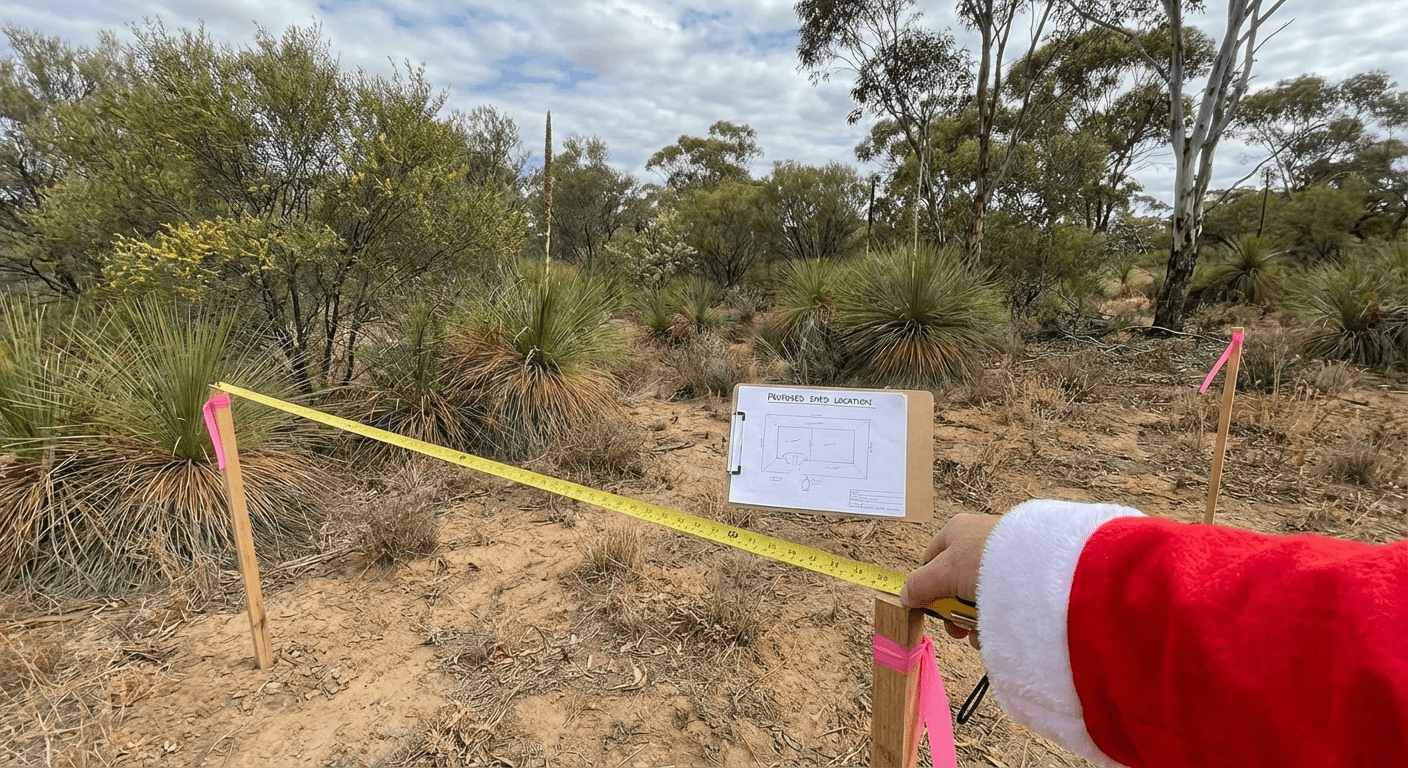
As the year draws to a close, it is a great time to start planning your development on site. Whether it is storage space, a new addition to the back yard, or for farm use, this is the best time to start planning your new project!
Like our previous articles explored, there are many different aspects to consider when getting a project underway. Here is a helpful timeline to help you start planning.
Week before Christmas:

The week of Christmas is a great time to work out what you want on your site. Whether it is a double garage for storing vehicles, a workshop with an outdoor entertaining lean-to, or something large enough to store all your Christmas presents and more!
After that thought, your next may be. Well, what can I do on my property? That is where PlanDAT comes in.
This report can be ordered on the PlanDAT Website, this report will tell you your legal guidelines for the shed on your site including;
-
How big of a shed you can build on your site.
– Without approval (exempt), through a certifier (complying development), and through a development application via council.
-
Where you can build it
– Front, Side and Rear Setbacks.
-
And how long an approval takes approximately.
– including the average turn around in the council for shed DA approvals that year.

Once you understand what your planning requirements are and you have chosen which approval pathway options you would like to take, its a good time to start measuring out in the back yard.
Buy yourself a cheap ‘Long tape’. You will need 25 – 30m. Short tape measures wont do the job. Bunnings have them as cheap as about $20 Bunnings – Long tape. Also grab a can of Line Marking Paint that will cost about $8 – $10 a can.
Using your PlanDAT report, mark out the side and rear boundary offsets by just working off your fences. Note: Your fences are probably not in the exact location as the boundary but they should be close. Once you have these markers on the ground you now have a shed envelope that you can work within.
Tip: A couple of things you will need to look out for that could affect the location:
Rural sites:
1. Diversity mapping.
Bio Diversity mapping is a state government mapping where they have identified ‘potential’ habitats for threatened or endangered Flora or Fauna. This mapping could be on your site.Placing a shed within this mapped area will also slow down your project and add cost. PlanDAT grabs this map for you to find out if your site is affected. Fernleigh can then advise whether you are likely to need an environmental consultant to review the site and proposal.
2. Bushfire mapping.
See our article about Bushfires and sheds.
3. Retaining walls or battered excavation finish.
-
-
-
- Rural properties normally require large sheds, large sheds normally require large excavation. Large excavation normally means expensive retaining walls but are they even needed?
-
- Depending on the max cut and fill permissible on your site, you may be able to cut and fill without the need for retaining walls. Using a 1 on 2 slope ratio when cutting in your shed pad can save alot of time and money. Retaining walls can be a great feature (if done right) and can be a great way to manage stormwater and overland flow from affecting your shed but large sheds can be built without them. Landscaping a battered pad can help to stop erosion and slow water down from passing through your site.
-
- What type of retaining wall is most popular? The vast majority of the retaining walls Fernleigh does is Sandstone quarry block walls. They are fast and cost effective and all done by a machine thats needed on site to prepare the pad anyway.
-
-
- 4. Intended use. Farm Building or Personal use?
- The intended use of a building has an impact on how it will be approved. Farm Buildings for example are considered commercial structures used for primary production purposes. Personal use sheds on rural properties go through a different set of guidelines for approval and also have different national construction code NCC requirements. The way you intend to use the shed will determine its building classification and therefor how it will be approved. Read more here: Classification of Farm Buildings.
-
- 5. Watercourses
- Building near watercourses can cause issues and should be avoided. Building near a watercourse may have issues with sediments and acid sulphates being exposed during excavation (potentially polluting the waterway), geotechnical issues and water quality issues being negatively impacted. Generally speaking try and stay around 40m away from a dam, creek or watercourse to avoid potential complications with your approval.
-
- 5. Septic disposal areas
- Septic or effluent disposal area need to be approved when a habitable dwelling has been built to treat and dispose of waste water created by the dwelling. The size of these areas depend on how many occupants are using the dwelling, slope of the land and the geographic make up of the ground where septic is being disposed (i.e the grounds absorptive capacity). When we are doing approvals for sheds on rural sites near dwelling we often encounter approved effluent disposal areas that will be affected. When we do, we need to engage a Waste water consultant to re-establish a new area and apply for a modification to the existing disposal area. This can cause delays from council so if you are on septic, it is best to understand what the approved area is and avoid it where possible.
-
Residential sites:
1. Sewer Mains.
You can build over your own sewer pipes that drain to the main however there are further requirements if you want to build over the sewer MAIN (You can find out more by viewing this section in your PlanDAT Report). Even though they are on your site, they aren’t owned by you. Some are owned by the water asset company that manages the water assets in your council area. Some are owned by council.
Basically; if you want to build near them, it will cost more and be slower to approve because additional approvals are required. The costs involved for additional piering and or encasing the sewer line with concrete can be a show stopper. So avoid them if you can. Below is a typical sewer maintenance hole detailed as SMH on most plans. Avoid these where possible.
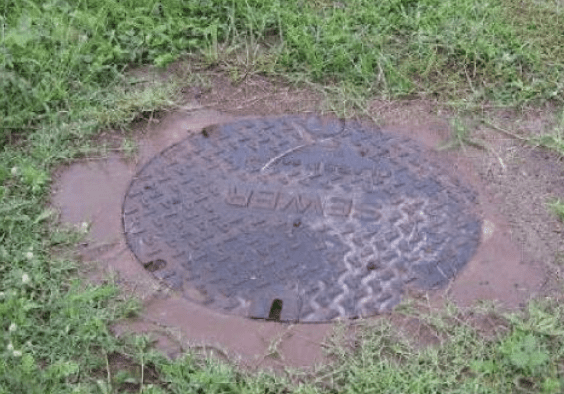
Source: Sydney water.
There are other sewer and stormwater items to consider on site when selecting your location. Read about them here
Something else worth looking into over the break is how your house is currently draining stormwater. When you build a shed or garage on a residential site, you will need to tap into that stormwater management system or create a new one.
2. Stormwater.
Sites that slope towards the street are generally pretty straight forward to manage stormwater connections. They often have kerb outlets provided by council in your street kerb and should be wet after any rain event. Your new shed will likely be able to tap into the existing system.
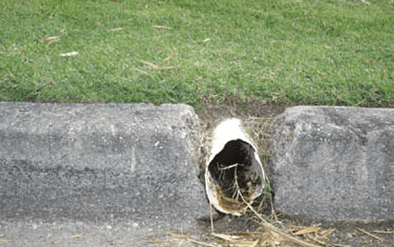
Sites that slope away from the street are a little more challenging to manage stormwater, particularly IF there isn’t an easement from draining stormwater in your back yard. When there is not an easement, it is a requirement to demonstrate how stormwater will be managed on site without affecting neighbouring properties in a storm event.
3. Easements.
So how do I find out if I have an easement? Stormwater easements are normally detailed on your lot plan or Deposited plan. You can buy these via the PlanDAT website if you need to. Note: Sewer can be built over but a stormwater easement cant be.
3. Tree removal.
Another thing worth considering is tree removal. If your shed falls within a location that will require tree removal, it is generally also more expensive and takes longer to obtain an approval. If the tree(s) to be removed are native, Council may request an arborist inspection report to determine the species, health status and impact of removal.
4. Excavation.
Something else that we have to work around alot [that can become expensive] is excavation. Get someone to come out and take laser heights or even better, get a Registered surveyor. So that your draftsperson can accurately work out the finished floor levels with the least amount of excavated material being required to be brought in to your site or taken away. Fernleigh take laser levels on site for you. They can also consider minimising retaining walls being required.
Note: Any fill being brought in will require a Virgin excavated natural material (VENM) Certificate.
5. Access.
When sheds are built, the builders need to get machines into your site. If retaining walls are required its even more likely. So another thing to look at is , where can the builder or machine operators get access.
And lastly, get your neighbours on board. Give them transparency about what you are doing and why. When your application goes to council, it goes on a mandatory 14 day notification period where council provide neighbours with an opportunity to write to them about any concerns with the application. This can cause significant delays if your neighbour gets surprise in the letter box. Providing them with transparency always works best.
So in summary..
over the christmas break; while you are setting out and measuring possible locations for your new shed:
-
- Get a PlanDAT report or planning advice. See which option works best for you.
- Gets some line marking paint and start painting out potential locations.
- Avoid sewer maintenance holes as a sewer main is nearby
- Understand what is happening with your stormwater drainage
- Avoid building in Bio Diversity mapped areas
- Locate on the flattest area to avoid expensive excavation costs.
- Review access
- Discuss your project with neighbours.
Christmas, Boxing Day → New year Eve:

Was Christmas too crowded in the house? Do you need some entertaining space in the form of an pergola or alfresco addition? Have the kids failed to move their stuff out of the house and they take up far too much room? Does that mean you need height for a mezzanine. Are the farm animals needing more and more stuff that cannot be stored in the current shed? Leaving your yard a mess.
Well once you have worked out what you can do, then you can work out what works on your site. Taking the options of the PlanDAT report, you should work out what will work on your site and for your storage needs. This is a good time to dig around for previous documents, like your contract of sale, survey plans, renovation plans, or anything prepared for the site prior to your purchase. This can make the design,location and drafting process easier.
Some questions and steps can be:
- Whether it is stepping out the footprint of the shed, working out what height your vehicle needs to get within, what roller door height you need?
- Are within 900mm of your neighbouring boundary?
- Based on the PlanDAT report is your property affected by any hazards, such as bushfire? Will this affect where you can place the shed?
All of these choices add to the design and costs of your project, that are important to at least begin to understand at this point.
Now that you have decided what you are after, the next step is to work out the costings of this project and determine your budget. From the concrete, to the kit, construction, and approvals there are several costs that come into obtaining an approval and constructing a shed. This leaves more questions..
This can include arranging the design with shed suppliers and obtaining a quote from them, speaking to builders to understand costings for the construction.
New Year – First Week:

When arranging these quotes, you will need to begin arranging the approval.
You can provide us your property details as well as the documents you have prepared so far, be them the;
- PlanDAT report,
- Shed Design Quote,
- Any existing house documentation like plans or surveys.
This will help Fernleigh get your project underway as soon as possible and automatically set up your project in our system.
During this period and our return to office we will get your project ready. This will allow us to begin reviewing, invoicing and getting your drafting underway before council returns to work throughout January. Generally, January is a slow month for council approvals, which means it’s the BEST time to get your projects underway, as council offices take leave throughout the month. Which will allow for your application to be in line with the assessing officers.