
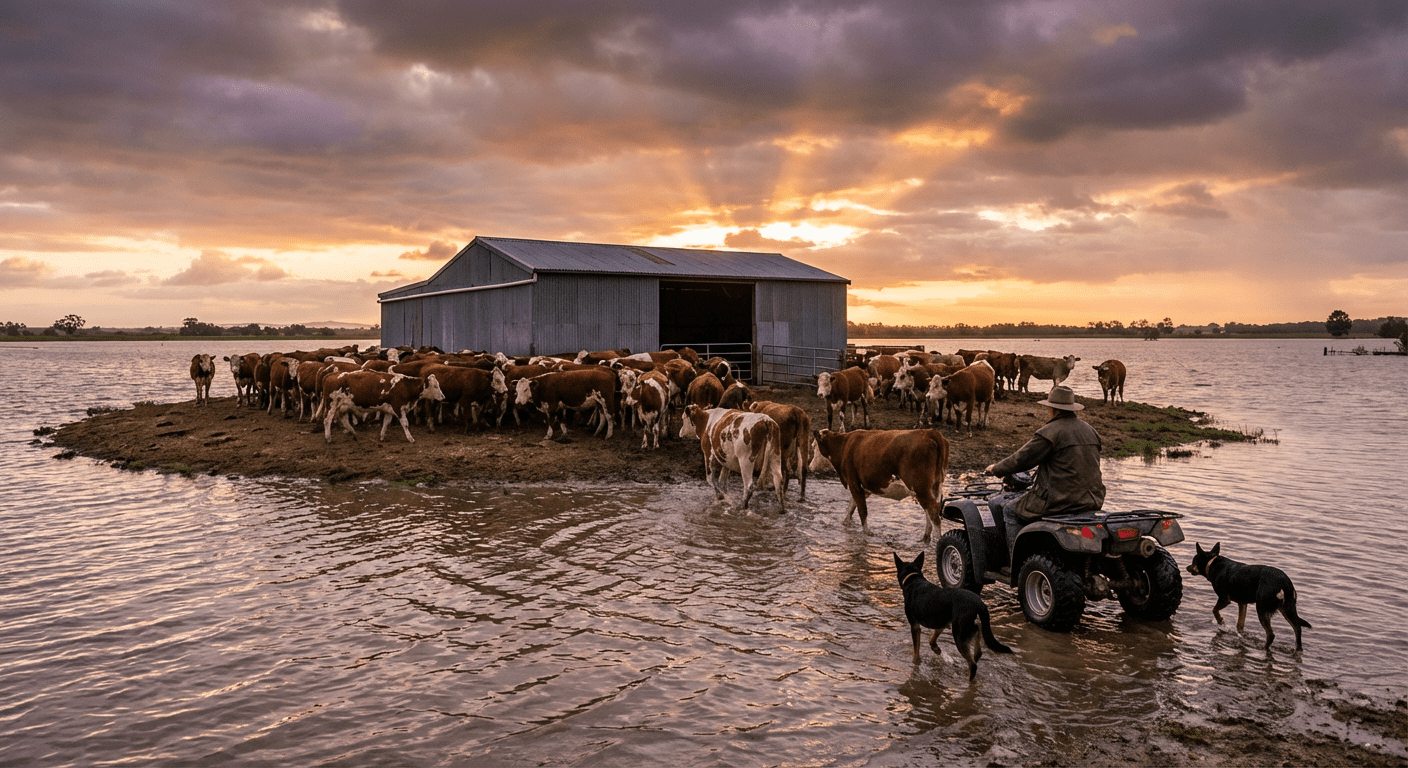
In the times of evolving urban landscapes, the issue of flood-prone areas remains as a critical consideration for property owners building within the Class 10a shed space. As of 2021, local councils have taken the reins in flood mapping. This shift places the responsibility of providing the most accurate and up-to-date flood mapping directly on the council. Locating this information is not a simple one, and has many different processes depending on the council area.
Understanding the implications of flood-prone land involves a multi-faceted approach. Councils undertake comprehensive Floodplain studies, illuminating the specific risks and impacts associated with flooding in a given region. For property owners navigating the complexities of developing in such areas, extra consideration is imperative for both site development and proposal design.
The ramifications of owning flood-prone land extend beyond mere awareness, there are restrictions to the development of the site. This includes imposition of planning controls, including minimum floor heights and set-backs from high risk flood zones. These are crucial investigations by council and the applicant to identify and minimize the development risks and impacts of flooding.
Different forms of flooding pose unique challenges to property owners. Low-lying coastal or lakeside areas face the permanent threat of submersion as sea levels rise, while other regions experience temporary inundation due to tides, waves, heavy rainfall, or storm surges. Navigating these diverse challenges requires a nuanced understanding of the local landscape.
What are the rules around flooding and how do we apply this to shed builds?
To initiate the construction process in a flood-prone area, obtaining a flood certificate is a crucial first step. This document provides valuable insights into the flood risks and levels specific to the site. Notably, it sheds light on the 1% Annual Exceedance Probability (1%AEP), a statistical measure indicating the likelihood of flooding in any given year.
Armed with a flood certificate, property owners and developers must ensure their construction plans align with flood advice report received from the council. This involves situating the shed above a specified flood height, a critical requirement for adherence to planning controls, and placement in a designated zone and location based on the flood certificate.
This collaborative effort with a structural engineer becomes essential, as they confirm the shed’s ability to withstand the forces associated with potential flooding. This confirmation can come from the kit supplier or an independent engineer, ensuring the structural integrity of the construction.
Constructing sheds in flood-prone areas demands a strong consideration of the controls interacting with the site. Property owners can develop the site with confidence, when worked with council and an engineer to ensure structures that not only withstand the forces of flood but will stand for many years to come.
Effect on the shed:
Generally the effect on flooding on sheds are minimal day to day, the policy is designed to protect in the worst cases (the 1:100 probabilities). The certification of a structure as being made with flood compatible materials doesn’t cause much change on corrugated sheds. This is because those materials are flood compatible. Other items such as not being habitable up or not containing electrical below a certain height ensure safety of the structure and of the users in the event of a flood event. Whilst providing little to no change in the structure itself.